Solitaire Collection Premium
Ruben ReboredoCard
4.2349.00 Reviews
- Version
- Varies With Device
- Installs
- 10.00K
- Age Rating
- Everyone
Screenshots
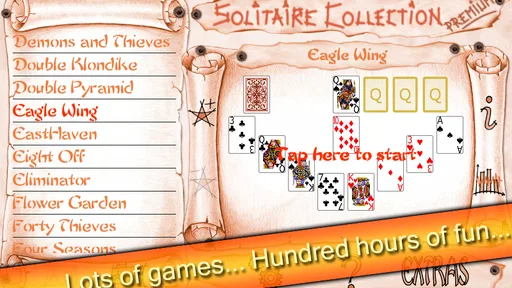
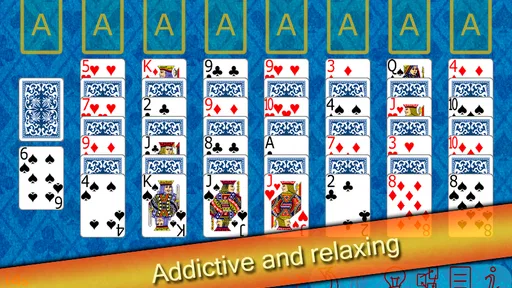
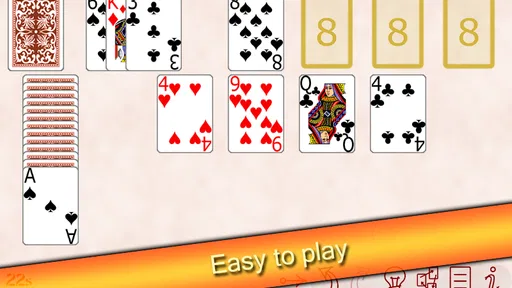
Our Review of Solitaire Collection Premium
 Analysis by Appyee
I judge a paid card game by a simple question: does it give me a good reason to choose it over a free alternative, and does that purchase feel clear before I start playing? Solitaire Collection Premium is a mobile solitaire game from Ruben Reboredo, priced at $2.99. It is aimed at people who would rather pay once for a collection of card games than spend their spare moments navigating a more complicated mobile experience. That straightforward purchase context is appealing, though the price alone cannot tell me how the game handles every possible payment or account detail.
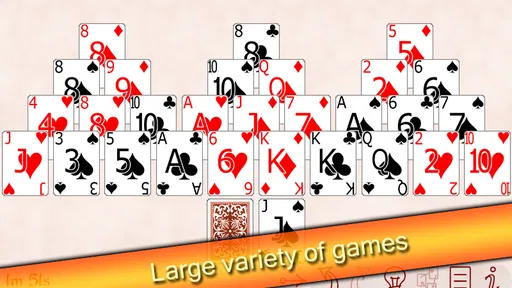
For a casual player, the key appeal is having several styles of solitaire in one place. Instead of installing separate games to switch between familiar formats, I can treat the collection as a small menu for choosing the kind of challenge that suits my mood. The range makes it easier to find a comfortable starting point, whether I want a recognisable layout or a game that asks me to plan more carefully. The trade-off is that a large collection is only useful if its individual games feel inviting; sheer choice does not automatically make every option equally enjoyable.
Paying for a collection rather than chasing a streak
The game has an average rating of 4.2 from around 1,300 ratings, alongside roughly 350 written reviews and over 10,000 installs. Those figures suggest that it has found a modest audience, but I would treat them as context rather than a guarantee that it will suit my habits. Solitaire preferences are personal: someone who loves carefully planning several moves ahead may judge a collection differently from someone who just wants a quick, familiar hand before bed.
The purchase is the most concrete spending detail I can weigh: it costs $2.99. I like knowing that there is a clear price to consider before deciding whether a dedicated collection is worthwhile. If I already play solitaire regularly, paying for an app focused on card games may make more sense than downloading a rotating assortment of free titles. If I only play occasionally, a free alternative could be the more sensible choice, especially if I do not care about having many varieties together.
Progress without pressure
Solitaire is a natural fit for short breaks because I can pause between decisions and play at my own pace. A few minutes waiting for a friend or winding down after dinner can be enough to start a hand, think through a move, and stop when I need to. That makes a collection like this easier to fit around everyday life than a game built around real-time competition or long sessions. I would not treat a card-game purchase as a promise of constant new goals, though: the strongest reason to return is whether the underlying games themselves stay enjoyable.
There is also a useful distinction between personal progress and external pressure. A satisfying win can encourage me to try another layout, while a difficult deal can invite a more deliberate approach. But players who depend on leaderboards, social contests, timed events, or a steady stream of unlocks should look carefully at whether those are actually central to the experience they want. I would not assume that any particular progression system or reward loop comes with a premium label; the purchase price does not, by itself, establish how those mechanics work.
Fairness is about the kind of challenge you want
In a solo card game, fairness is less about beating another person and more about feeling that my choices matter. The useful question is whether I enjoy the puzzle in front of me, including the moments when a layout calls for patience rather than a quick move. A collection gives me the option to change styles when one kind of solitaire stops being satisfying, but it cannot make every deal feel equally engaging.
Compared with a free solitaire game, the paid approach may suit me if I value a focused collection and want to decide on the cost up front. A free app may be preferable if I want to try before spending, or if its particular rules and extras matter more to me than having a broad selection. Against playing cards on a table, a mobile game is more convenient when I am alone or away from home, while physical cards offer a tactile experience a screen cannot reproduce. My choice would depend less on a claim that one format is universally better and more on where and how I actually play.
All-in-One Card Gaming Experience
First off, the Solitaire Collection Premium app isn’t just your average solitaire game. It’s like a party platter of card games, offering a variety of options that cater to both casual players and hardcore solitaire aficionados. You’ve got your classic Klondike, the ever-challenging Spider, the strategic FreeCell, and quite a few more to keep you entertained.
Each game comes with its own set of rules and challenges, and what’s cool is that the app offers helpful hints and tips if you’re feeling stuck. It's like having your own personal card game tutor. Plus, the interface is super intuitive. You can easily switch between games, which is perfect for someone like me who gets bored quickly and needs a change of scenery.
Visuals and User Interface
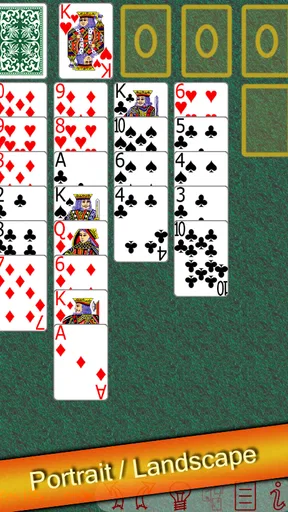
One of the first things that caught my eye was the sleek design. The developers clearly put some thought into making the app visually appealing. The cards are easy to read, and the animations are smooth, which is a huge plus when you’re playing on a smaller screen. I’m a sucker for aesthetics, and this app definitely delivers on that front.
The user interface is clean and straightforward, which means you can jump right into the action without any fuss. Whether you’re a tech whiz or a total newbie, navigating through the app is a breeze. No more fumbling around trying to figure out how to start your next game!
Customization and Features
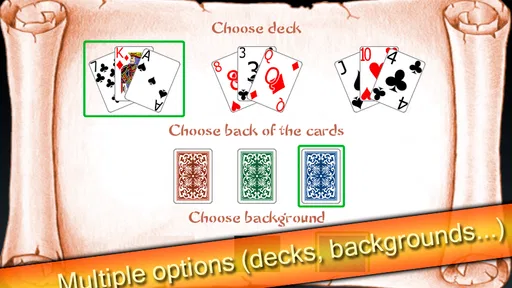
What really sets this app apart is the level of customization it offers. You can change the background themes and card designs to suit your mood, which adds a personal touch to your gaming experience. Whether you’re feeling like a classic green felt or something a bit more vibrant, you’ve got options.
Another feature I absolutely love is the daily challenges. It’s a great way to keep things fresh and test your skills. Completing these challenges earns you rewards, which adds a nice layer of motivation to keep coming back for more. Plus, who doesn’t love a little friendly competition?
Performance and Accessibility
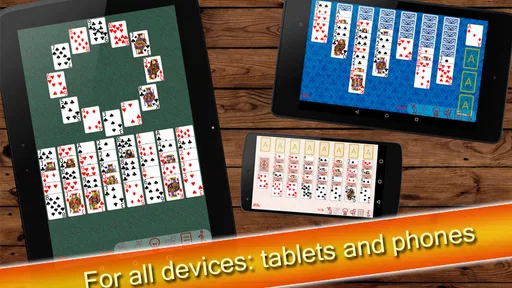
Now, let’s talk about performance. On both Android and iOS, the app runs like a dream. I didn’t experience any lag or crashes, which is a relief because there’s nothing more frustrating than a game freezing up right as you’re about to win. The app is lightweight, so it doesn’t take up much space on your device, leaving room for all your other apps and games.
Accessibility is another area where this app shines. It’s designed to be inclusive, offering adjustable settings for those with visual impairments or other disabilities. I love that the developers considered this, making solitaire enjoyable for everyone.
Choosing it for the right reason
I would recommend this collection most readily to someone who already knows that solitaire is a regular part of their downtime. The different game styles give that player room to vary the mental feel of a session: a familiar game can be a gentle reset, while a more demanding one can suit a quieter moment when there is time to think. If I were introducing a friend to solitaire, I would suggest starting with a format they recognize, then changing games only when they want a different kind of puzzle. That keeps the choice useful rather than turning the collection into a menu to browse endlessly.
A realistic use case is a short wait with no need to keep up with a live match. I can open a hand, make a few moves, and put the phone away when my name is called or the bus arrives. For that kind of stop-and-start play, the ability to move between games can be more valuable than a dramatic progression system. It also makes the collection a reasonable companion for travel or a quiet break, provided the player is happy to spend that time with a solo card puzzle rather than an activity that connects them to other people.
One practical tip is to treat hints as a learning aid, not an instruction to take every suggested move. When I am unfamiliar with a game, a hint can help me understand what options I have; after that, I can pause and decide whether the move supports the plan I want to try. This matters especially when switching between different solitaire rules, because a habit that makes sense in one format may not be useful in another. Taking a moment to read the situation is part of the appeal, not wasted time.
Another useful habit is to pick a game before opening the app when I only have a brief break. A broad collection invites browsing, and browsing can use up the very few minutes I meant to spend playing. I would choose a familiar option for a quick session and reserve experimentation for a longer, calmer stretch. That small distinction helps the variety feel like a real benefit instead of a distraction, and it makes it easier to notice which styles I genuinely return to.
What the purchase does and does not settle
The game is rated Everyone, which makes it suitable in content terms for a broad audience, including people looking for a straightforward card pastime. It was released on October 11, 2011, so it has been available for a long time; that history may reassure some players that it is an established title, but age alone does not tell me how well it fits a particular device or personal preference. The developer is Ruben Reboredo, and I would consider the app on its own merits rather than treating its age or audience rating as a promise about every feature.
There are a few purchase questions I would settle before committing. The listed price is clear, but it does not establish whether any optional spending exists, what happens to a purchase when moving to another device, or whether a particular version includes every feature a player expects. I would check the current platform’s purchase screen and the details shown there before paying, especially if I am switching phones or comparing editions. That is a sensible check, not a reason to assume there is a hidden charge.
The same care applies to play expectations. Someone looking for competitive matchmaking, a shared table, or a social community should choose a game that clearly puts those things at its centre. Someone who wants a solo puzzle collection may be much happier here. I would also steer away a player who needs every session to deliver a new story, a campaign, or a changing objective; the lasting appeal of solitaire is repetition with room for better decisions, and not everyone finds that satisfying.
Where it fits among other solitaire choices
Many free card games compete by making the first step effortless, and that can be the better route if I am not sure I will play often. A focused paid collection asks me to decide that the convenience and selection are worth the upfront cost. Compared with installing a separate app for each solitaire variant, having several in one place can make experimentation simpler and reduce the need to switch between different interfaces. But a specialist app devoted to just one version may be a stronger fit for a player who cares deeply about that particular ruleset and wants no distractions from it.
Physical cards remain appealing when I want to handle a deck, share a game with another person, or take a break from looking at a screen. A mobile collection makes more sense when I am by myself and want a compact way to play without laying out cards. Neither option replaces the other completely. I would choose the phone for convenience and variety, a physical deck for the tactile experience, and a free app if testing the habit matters more than having a paid collection ready to hand.
The main limitation I would keep in mind is that variety cannot guarantee depth in every included game. If I settle on one favourite and rarely touch the others, the breadth may not add much value for me. Conversely, a player who likes changing rules and learning new patterns may find the selection more worthwhile over time. That is why I would base the decision on how often I play solitaire and whether I enjoy trying different formats, rather than treating a count of games as a measure of quality by itself.
Final Thoughts
So, is Solitaire Collection Premium worth downloading? Absolutely! Whether you’re a solitaire veteran or just looking for a fun way to pass the time, this app has something for everyone. With its variety of games, beautiful design, and user-friendly interface, it’s a must-have for any card game lover.
Grab your phone, download the app, and get ready to shuffle up and deal. Trust me, you won’t regret it!
My recommendation is more measured: I would consider it a good fit for a regular solitaire player who values having a range of card games together and is comfortable with the stated $2.99 purchase. The 4.2 average rating and its established player base offer a little context, but they cannot substitute for deciding whether the included styles match the way I like to play. If I only want one specific variant, prefer a free trial, or need social competition, I would compare other options first.
For me, its appeal is the simple, low-pressure routine of choosing a card puzzle and playing at my own pace. I would go in for the collection and the convenience, not on the assumption that every question about purchases, progress, or long-term support is answered by the price. If that distinction sounds fair to you, it is an easy kind of game to consider for a quiet moment; if not, a free or more specialised alternative may be the better choice.
Verdict
Strengths of Solitaire Collection Premium
- Ad-free experience enhances gameplay.
- Variety of solitaire games included.
- Intuitive and easy-to-use interface.
- Regular updates add new features.
- Offline mode available for travel.
Limitations of Solitaire Collection Premium
- Limited customization options.
- No multiplayer or social features.
- Requires periodic internet connection.
- Higher price than similar apps.
- Limited tutorial for beginners.
Similar Picks in This Category
View All
Solitaire - Classic Card Games
MobilityWare4.6

UNO!™
Mattel163 Limited4.3

Spider Solitaire: Card Games
MobilityWare4.6

Solitaire.com - Classic Cards
Tripledot Studios Limited4.7

Plants vs. Zombies™ Heroes
ELECTRONIC ARTS4.1

Hearthstone
Blizzard Entertainment, Inc.4.1
Frequently Asked Questions
What features does Solitaire Collection Premium offer?
Solitaire Collection Premium offers an extensive set of classic solitaire games, including Klondike, Spider, FreeCell, and more. It provides an ad-free experience, high-quality graphics, and customizable themes. Players can also enjoy daily challenges, achievements, and detailed statistics to track progress and improve skills.
Is Solitaire Collection Premium available offline?
Yes, Solitaire Collection Premium is designed to be fully functional offline. This means you can enjoy your favorite solitaire games without needing an internet connection, making it perfect for travel or when you're in areas with limited connectivity.
How does Solitaire Collection Premium enhance the gaming experience?
The app enhances the gaming experience by offering a smooth, ad-free interface with intuitive controls. It includes customizable card decks and backgrounds, providing a personalized touch. The app also features daily challenges and leaderboards to engage players and encourage competition and improvement.
Are there any in-app purchases in Solitaire Collection Premium?
Solitaire Collection Premium is a paid app, so it does not include any in-app purchases. The one-time purchase provides full access to all features without additional costs, allowing users to enjoy an uninterrupted gaming experience without any surprises.
Can I sync my progress across multiple devices?
Currently, Solitaire Collection Premium does not support cloud sync for progress across multiple devices. Each device will maintain its own records and statistics. However, the app’s developers are working on future updates that may include this feature to enhance user convenience.
Play our best games!


